
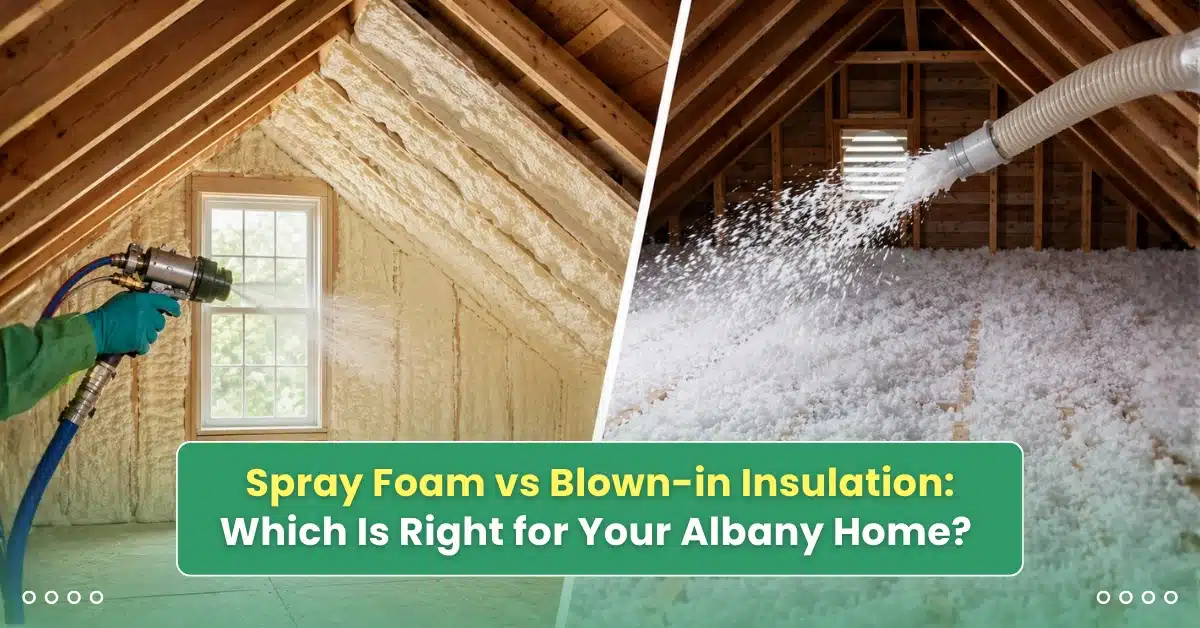
Albany homeowners often get confused when choosing between spray foam vs blown-in insulation. Both insulation types help improve energy efficiency and indoor comfort. They also help reduce heat loss and lower utility bills; however, they differ in cost, installation process, and long-term performance.
When it comes to a living space, comfort is something everyone wants. After all, home is where you spend most of your time, so you want it to feel comfortable in every season. No one likes dealing with hot rooms in summer, cold drafts in winter, or high monthly electricity bills.
Choosing the right insulation for your home is an important decision because it helps create a comfortable and healthier living environment for you and your family. Let’s discuss spray foam and blown-in insulation in detail to better understand which option is right for your Albany home.
What Is Spray Foam Insulation?
Spray foam is a special material used to keep homes warm in winter and cool in summer. It acts as an air barrier that blocks air from moving through walls, floors, and ceilings. Most homeowners choose spray foam insulation for spaces around electrical outlets and light fixtures.
Spray foam insulation can be used to fill open gaps in attics, crawl spaces, and rim joists. Not only that, but it can also be applied to existing homes, commercial buildings, and barns.
What Is Blown-In Insulation?
Blown-in insulation is made from loose-fill materials like cellulose, fiberglass, or mineral wool. It is installed using a special machine that blows the material into walls, attics, and other difficult-to-reach areas. With blown-in insulation, you can expect reduced heat loss, improved indoor comfort, and better energy efficiency. It also helps seal small cracks and fill uneven spaces effectively.
Major Differences Between Spray Foam and Blown-In Insulation
Both spray foam and blown-in insulation help keep a home warm in cold weather and cool during hot weather. However, each insulation type has its own advantages. Here are the five major differences between them:
- Spray foam provides strong air sealing, while blown-in insulation only blocks some air leakage.
- The installation cost for spray foam insulation is higher, while blown-in insulation is much more affordable to install.
- For small gaps and tight spaces, spray foam insulation works well. Blown-in insulation is good for attics and walls.
- Spray foam insulation lasts longer and keeps out moisture better. Blown-in insulation may settle over time.
- Spray foam generally saves more energy, while blown-in insulation is good for basic insulation needs.
Cost Comparison: Spray Foam vs Blown-In Insulation
You must understand the cost of both spray foam and blown-in insulation because the price difference can significantly affect your overall budget. Let’s take a quick look at the costs of both services:
|
Insulation Type |
Average Cost Per Sq. Ft. |
Installation Cost |
Energy Efficiency |
Lifespan |
|
Spray Foam Insulation |
$1.50 to $5.00 |
Higher |
Excellent |
Over 20 years |
|
Blown-In Insulation |
$1.00 to $2.80 |
Moderate |
Good |
10 to 15 years |
Spray foam insulation may seem more expensive initially, but it seals air leaks more effectively and improves overall energy efficiency. Blown-in insulation, on the other hand, is more affordable and works well for attics and existing walls, making it a cost-effective option for most households.
The right insulation for Albany, NY, homeowners depends on budget, weather conditions, and long-term energy savings goals.
Pros and Cons of Spray Foam and Blown-In Insulation
Both spray foam and blown-in insulation types have their good and bad sides. When you understand these pros and cons, it becomes easier to choose the right insulation for your Albany home. Let’s take a closer look at the pros and cons of each insulation:
Spray Foam Insulation
|
Pros |
Cons |
|
Excellent air sealing and energy efficiency |
Higher upfront installation cost |
|
Improves indoor comfort year-round |
Installation may involve temporary odors or fumes |
|
High R-value for better insulation performance |
It can be difficult to remove later |
|
Long-lasting and durable |
Not ideal for every budget |
|
Helps reduce moisture and air leaks |
Requires professional installation |
Blown-In Insulation
|
Pros |
Cons |
|
Installation is very affordable |
May settle over time and reduce effectiveness |
|
Easy to fit into walls and ceilings |
Lower air-sealing ability than spray foam |
|
Works well for attics and existing walls |
Less moisture-resistant |
|
Eco-friendly options like cellulose are available |
Lower lifespan than spray foam |
|
Good soundproofing performance |
May require additional air sealing for better outcomes |
Tips to Select the Right Insulation for Your Home
If you are planning to install insulation in your home, it is important to keep a few smart tips in mind to enjoy the best comfort and better energy efficiency. Here are the tips to follow:
Know Your Local Climate
Understand that different insulation materials work better in different weather conditions. For instance, spray foam insulation is well-suited to extremely cold regions like Albany, as it creates an airtight seal that prevents heat loss. On the other hand, blown-in insulation is ideal for moderate climates because it evenly fills gaps and improves overall energy efficiency. So, you must choose insulation with the right R-value for your region.
Note: R-value refers to how well insulation prevents heat from entering or leaving your home. The higher the R-value, the better the insulation performance and energy savings. A lower R-value indicates that the insulation blocks less heat, so it may not keep your home as warm or energy-efficient.
Choose the Right Material
Whatever material you choose should be within your set budget, climate conditions, and insulation needs. For instance, blown-in insulation is budget-friendly and widely used by homeowners to cover attics and tight spaces. Spray foam is very versatile as it can expand to cover every nook and cranny, giving a superior air seal. Since every home has different insulation needs, you must compare the durability, installation process, maintenance needs, and overall performance before making a final decision.
Check Long-Term Durability
Choose insulation that can withstand and maintain its performance for years to come. Look for long-lasting insulation materials that can help lessen maintenance costs and continue to provide proper thermal protection to your home. If you choose good, high-quality insulation, it will not sag, damage, or settle from wear and tear.
Focus on Moisture Resistance
Moisture-resistant insulation can help prevent mold, mildew, and water damage inside your property. If you are living in humid regions, basements, or crawl spaces, then this is a great choice. This is because in such places, the moisture can build up easily. With the right insulation, you can have better indoor air quality and enhanced insulation performance.
Hire Experienced Professionals
Insulation should be installed by experienced professionals. So, you must assign this job to the most experienced professionals. They can complete the installation properly without leaving gaps, air leaks, or wasting time. With the right professionals, you can ensure proper installation and maximum energy efficiency. The most skilled, certified experts can suggest the appropriate insulation type for your home. When choosing the right person for this job, get recommendations from previous clients or check the customer reviews online.
Vertesol: Trusted Insulation Experts in Albany, NY
For homeowners seeking top-grade spray foam or blown-in insulation services in Albany, Vertesol is a trusted provider. We offer various insulation services, and we have helped 100+ clients in making their homes more comfortable and energy-efficient.
Before installing the insulation material, we carefully inspect the property and suggest the right insulation option. We ask our clients about their concerns and needs. Our team also asks whether they feel comfortable in their rooms or if their utility bills have increased due to poor insulation. This helps us spot problematic areas and decide where spray foam or blown-in insulation will be appropriate.
If you want to make a more comfortable living space, reduce your monthly bills, and lessen the load on your HVAC systems, we are here to help. Contact Vertesol today to schedule reliable spray foam or blown-in insulation services for your Albany home.
Frequently Asked Questions
Choose from brands like Fly Racing, Alpinestars, FXR, and K1 RaceGear if you’re shopping for the best motocross suits in 2026. These brands are very popular for offering great quality, comfort, and safety.
Follow what’s mentioned in the manufacturer’s care instructions to wash the gear. Avoid using harsh detergents on the suit. Once you have washed the suit, let it air-dry so its quality and color do not degrade.
Yes, you can wear a motocross suit on a rainy day. Most MX racing suits can handle light rain and muddy tracks. But if it is raining heavily, you might need additional waterproof riding gear.