
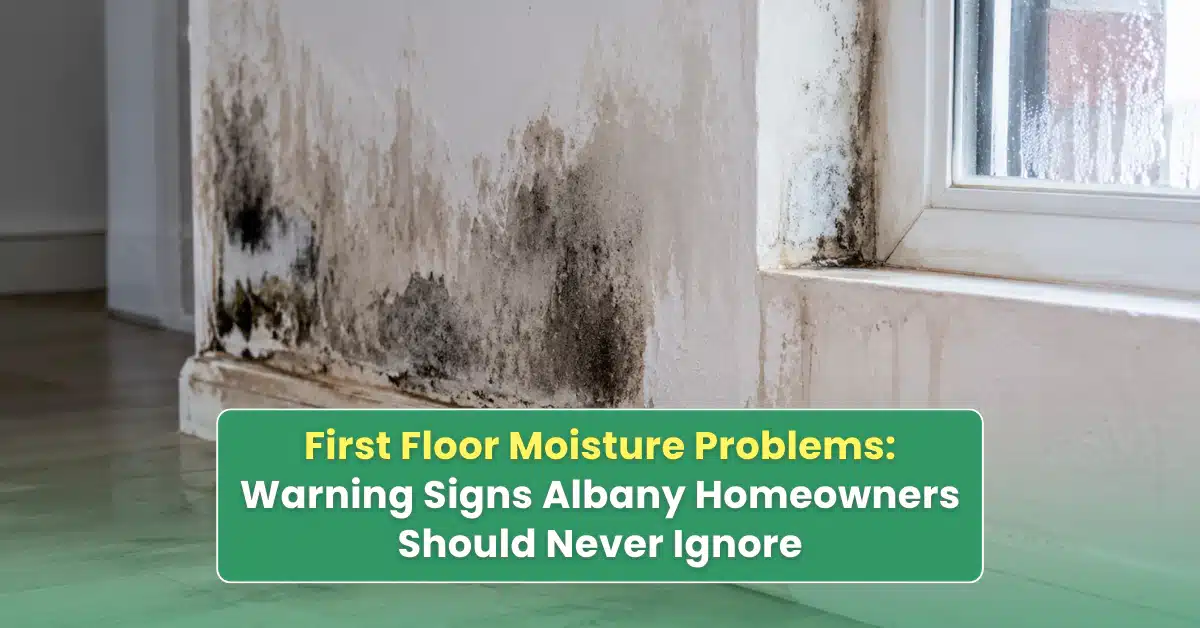
One of the common reasons behind this problem is that many older homes in Albany may have aging foundations, drainage systems, or moisture barriers that become less effective over time. There are several other factors that can contribute to this issue, and in this write-up, you’ll learn about them. You’ll also learn about common warning signs, other moisture-related problems, and tips to prevent them.
What Causes Moisture Under the First Floor in Albany, NY?
Several factors may cause moisture under the first floor, which can damage your flooring and lead to long-term problems. Here is a list of the most common causes:
- Plumbing Leaks: The water may be coming from the toilet, slow drips from pipes, or appliances like the AC, and it may seep into your floor if there is a leak behind a wall or door. A small leak can also cause visible damage in the long term.
- Poor Drainage Around the Home: If rainwater, groundwater, or melted snow is not properly drained from your house, it collects around your foundation and slowly seeps into your floor, causing moisture problems. It can increase moisture in crawl spaces and basements.
- High Indoor Humidity: High humidity in crawl spaces leads to condensation on cooler floor surfaces. It happens in poorly ventilated basements with high humidity, where, without a vapor barrier, ground moisture feeds the subfloor, creating a moist environment.
- Seasonal Weather Conditions: Sometimes, harsh weather, such as snowfall or ice melt, can also cause moisture in the subfloor. Heavy rainfall, snowmelt, and wet spring conditions are common in Albany, which can contribute to first-floor moisture problems.
- Pests and Structural Damage: Pests like termites can damage your subflooring and create pathways for moisture, which can lead to mold growth and further moisture concerns.
Floor Moisture Warning Signs Homeowners Should Never Ignore
There are many signs of moisture on the first floor that homeowners should never ignore. If you notice any of these signs, take action immediately to address the problem.
Unexplained Water or Dampness
You may not see any visible signs of leaks, but there are a few signs of floor moisture, like damp spots that reappear after wiping, small puddles, and dampness near appliances, even when they’re not running.
Warped, Buckled, or Soft Floors
The condition of your floor can reveal a lot about moisture problems. If you notice warped boards, raised areas, or uneven flooring, it may be a sign that the wood has absorbed too much moisture. If you have vinyl flooring, it may bubble or develop soft spots.
Discoloration or Stains
Discoloration or stains are among the most common indicators of water leaks and moisture problems. You will notice dark stains on hardwood and yellowing and darkening signs in vinyl and laminate flooring.
Peeling Paint or Wallpaper
Moisture trapped behind wallpaper or painted walls weakens adhesion, causing peeling and bubbling. It may also make the floor surface slightly lifted.
Mold Growth in Unexpected Areas
Persistent water leaks may lead to mold growth in hidden or unexpected areas, often causing a musty odor. The smell becomes even more intense in humid conditions. Moisture that accumulates beneath the floor often causes mold growth.
How Moisture Under the First Floor Can Damage Your Home
Accumulated moisture beneath the first floor can damage your home over time if you don’t take action early. Here is how persistent moisture can damage your subfloor:
Structural Wood Damage
Wood is moisture-sensitive, and prolonged exposure to water can weaken its strength and durability over time. It is mostly damaged by water. Water may seep into wood floor joists, beams, and subfloors, causing warping, buckling, or cupping.
Flooring Material Deterioration
Flooring material is damaged by water, leading to a gradual decline in its condition or appearance. As a result, the structural integrity of the floor surface is damaged. Moisture degrades flooring by weakening adhesive bonds, warping the material, and promoting mold growth.
Mold Growth and Air Quality Issues
Mold often develops in damp areas where moisture remains trapped for long periods. But its indoor growth can be risky for your flooring. Accumulated moisture and high indoor humidity create an ideal environment for mold growth, which may also cause a bad odor later.
Higher Repair Costs
A damaged floor can lead to high repair costs, which depend on the extent of the damage. You may also need repairs more often due to recurring moisture problems affecting wood, flooring materials, and other parts of the home.
Reduced Property Value
If the moisture problem and floor damage persist in your home, they’ll slowly reduce your property value over time. This is how a seemingly simple and obvious moisture problem can impact your property in the long term.
Tips to Prevent Moisture Problems Under Your First Floor
“Prevention is better than cure” also applies to floor moisture problems. If you prevent moisture from getting trapped in your home’s flooring, it will likely reduce damage. Here is a list of effective tips for preventing moisture problems:
- Address water leaks and damage on your floors. It could be a stain, warping, or a bad smell.
- Use doormats and rugs near entrances to help reduce the amount of moisture tracked onto your floors, and choose highly absorbent ones to manage excess moisture easily.
- Ensure a good ventilation system in your home to keep moisture away from areas like the kitchen, bathrooms, and basements, where humidity is higher.
- Install exhaust fans in laundry rooms, kitchens, and bathrooms to remove excess humidity and prevent moisture from settling on your floors.
- Use a protective sealant on your floor to create a barrier that helps prevent moisture from seeping in and causing damage. Some flooring materials may benefit from additional protection depending on their condition and installation.
- Clean a liquid spill immediately, whether it’s juice, water, or any greasy material.
- Use a dehumidifier to maintain indoor humidity at optimal levels.
Vertesol: Best First Floor Moisture Damage Repair in Albany
At Vertesol, we provide professional first-floor moisture damage repair services in Albany for homeowners dealing with persistent flooring and foundation moisture issues. We understand that every home is unique and requires a specific solution. We help address these moisture problems by sealing affected areas, improving moisture control, and reducing excess indoor humidity.
We inspect bathroom and kitchen leaks, aging waterproofing systems, winter ice buildup, foundation cracks, plumbing concerns, and drainage problems around the roof and attic. Many residents in Albany, NY, have used our first-floor moisture issue repair services to improve their flooring conditions.
So, if you’re observing mold growth in your walls or floors or serious damage to your ceilings, walls, or the structure of your home, contact us. We will explain our services and recommend solutions that help reduce the risk of future moisture damage.
Frequently Asked Questions
Moisture under the first floor in Albany, NY, is usually caused by poor drainage systems, plumbing leaks, humid summer weather, and exposed crawl spaces.
You may notice curling or cupping of hardwood planks, swelling, bubbling, discoloration, loose flooring, or a musty odor. Loose tiles and a spongy floor, discoloration, and a musty odor also indicate a moisture problem.
Yes, moisture under the first floor can cause mold growth. This is because a damp and humid environment is ideal for mold growth.